what is the bill of rights and how did it come to be added to the constitution
"[A] nib of rights is what the people are entitled to against every government on earth, full general or particular, and what no simply authorities should refuse."
- Thomas Jefferson, December 20, 1787
In the summertime of 1787, delegates from the 13 states convened in Philadelphia and drafted a remarkable design for self-authorities -- the Constitution of the U.s.a.. The first draft set up a organisation of checks and balances that included a stiff executive branch, a representative legislature and a federal judiciary.
The Constitution was remarkable, but deeply flawed. For i affair, information technology did not include a specific declaration - or bill - of individual rights. Information technology specified what the authorities could practice but did non say what it could not do. For some other, it did non apply to everyone. The "consent of the governed" meant propertied white men only.
The absence of a "bill of rights" turned out to be an obstacle to the Constitution'southward ratification by the states. It would have iv more years of intense fence before the new government's grade would exist resolved. The Federalists opposed including a pecker of rights on the ground that it was unnecessary. The Anti-Federalists, who were afraid of a stiff centralized regime, refused to support the Constitution without ane.
In the end, popular sentiment was decisive. Recently freed from the despotic English language monarchy, the American people wanted strong guarantees that the new government would not trample upon their newly won freedoms of voice communication, printing and faith, nor upon their right to be free from warrantless searches and seizures. So, the Constitution'southward framers heeded Thomas Jefferson who argued: "A pecker of rights is what the people are entitled to against every government on world, full general or item, and what no just government should turn down, or rest on inference."
The American Pecker of Rights, inspired by Jefferson and drafted by James Madison, was adopted, and in 1791 the Constitution's kickoff ten amendments became the law of the land.
Limitied Government
Early American mistrust of regime power came from the colonial feel itself. Nigh historians believe that the pivotal consequence was the Stamp Act, passed by the English Parliament in 1765. Taxes were imposed on every legal and business certificate. Newspapers, books and pamphlets were too taxed. Even more the taxes themselves, the Americans resented the fact that they were imposed by a afar government in which they were not represented. And they were further enraged by the ways in which the Stamp Act was enforced.
Armed with "writs of assist" issued past Parliament, British customs inspectors entered people's homes even if they had no evidence of a Postage stamp Act violation, and ransacked the people'south holding in search of contraband. The colonialists came to hate these "warrantless" searches and they became a rallying point for opposition to British rule.
From these experiences came a uniquely American view of ability and liberty as natural enemies. The nation's founders believed that containing the authorities'south ability and protecting liberty was their about important chore, and declared a new purpose for government: the protection of private rights.
The protection of rights was not the government'south just purpose. Information technology was still expected to protect the community against foreign and domestic threats, to ensure economic growth, and to acquit strange affairs. It was not, however, the authorities's job to tell people how to alive their lives, what religion to believe in, or what to write about in a pamphlet or newspaper. In this sense, the idea of individual rights is the oldest and most traditional of American values.
"Sure Unalienable Rights"
Democracy and freedom are frequently idea to exist the same affair, but they are not.
Republic means that people ought to exist able to vote for public officials in off-white elections, and make most political decisions past majority rule.
Freedom, on the other hand, means that fifty-fifty in a republic, individuals take rights that no majority should be able to take abroad.
The rights that the Constitution's framers wanted to protect from authorities abuse were referred to in the Declaration of Independence as "unalienable rights." They were likewise chosen "natural" rights, and to James Madison, they were "the great rights of mankind." Although it is commonly thought that we are entitled to free speech because the First Amendment gives it to the states, this land'southward original citizens believed that equally human beings, they were entitled to costless speech, and they invented the First Subpoena in order to protect it. The unabridged Beak of Rights was created to protect rights the original citizens believed were naturally theirs, including:
- Freedom of Religion
- The correct to exercise 1'south ain organized religion, or no religion, free from any government influence or compulsion.
- Freedom of Speech, Printing, Petition, and Assembly
- Fifty-fifty unpopular expression is protected from government suppression or censorship.
- Privacy
- The right to be free of unwarranted and unwanted government intrusion into one's personal and private affairs, papers, and possessions.
- Due Procedure of Police
- The right to exist treated fairly by the government whenever the loss of liberty or property is at stake.
- Equality Before the Law
- The correct to exist treated equally earlier the law, regardless of social status.

"An Impenetrable Bulwark" of Liberty
The Bill of Rights established soaring principles that guaranteed the most fundamental rights in very full general terms. But from the beginning, existent live cases arose that raised difficult questions about how, and even if, the Bill of Rights would be applied. Earlier the newspaper rights could go bodily rights, someone had to interpret what the language of the Bill of Rights meant in specific situations. Who would be the final arbiter of how the Constitution should be applied?
At first, the answer was unclear. Thomas Jefferson idea that the federal judiciary should have that power; James Madison agreed that a system of independent courts would exist "an bulletproof barrier" of liberty. But the Constitution did non make this explicit, and the effect would not exist resolved until 1803. That year, for the commencement time, the U.S. Supreme Court struck downward an human activity of Congress equally unconstitutional in a case calledMarbury 5. Madison. Although the facts of this case were fairly mundane (a dispute over the Secretary of State's refusal to committee four judges appointed by the Senate), the principle it established - that the Supreme Court had the ability to nullify acts of Congress that violated the Constitution - turned out to be the key to the evolution and protection of most of the rights Americans savor today. According to ane eminent legal scholar, the independent judiciary was "America's well-nigh distinctive contribution to constitutionalism."
Cases or Controversies
The judicial branch of the new government was unlike from the legislative and executive branches in one very important respect: the courts did non accept the ability to initiate action by themselves. Congress could pass laws and the President could issue executive orders, only courts could not review these actions on their own initiative. Courts had to wait until a dispute - a "case or controversy" - broke out between real people who had something to gain or lose by the outcome. And equally it turned out, the people whose rights were most vulnerable to governmental corruption had least capacity to sue.
Thus, although the ability of judicial review was established in 1803, more than than a century would pass earlier the Supreme Courtroom even had many opportunities to protect individual rights. For 130 years after ratification, the most notable matter most the Pecker of Rights was its nigh total lack of implementation by the courts. Past the beginning of the 20th century, racial segregation was legal and pervaded all aspects of American society. Sexual activity discrimination was firmly institutionalized and workers were arrested for labor marriage activities. Legal immigrants were deported for their political views, the police used physical compulsion to excerpt confessions from criminal suspects, and members of minority religions were victims of persecution. As tardily as 1920, the U.S. Supreme Court had never in one case struck downward any law or governmental action on Kickoff Amendment grounds.
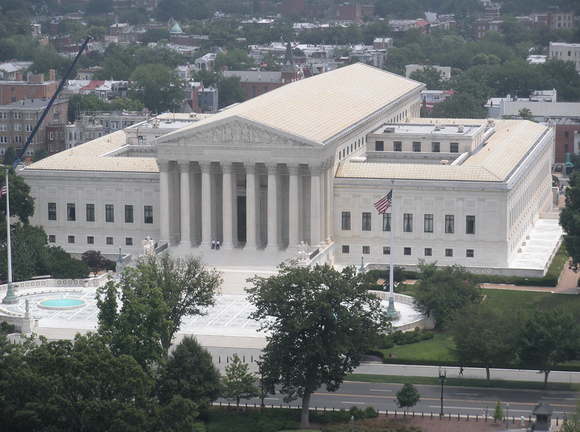
The most common constitutional violations went unchallenged because the people whose rights were most oft denied were precisely those members of lodge who were least aware of their rights and to the lowest degree able to beget a lawyer. They had no access to those impenetrable bulwarks of liberty - the courts. The Bill of Rights was like an engine no one knew how to start.
In the Public Involvement
In 1920, a small group of visionaries came together to talk over how to start the engine. Led by Roger Baldwin, a social worker and labor activist, the grouping included Crystal Eastman, Albert DeSilver, Jane Addams, Felix Frankfurter, Helen Keller and Arthur Garfield Hayes. They formed the American Civil Liberties Spousal relationship (ACLU) and defended themselves to holding the government to the Bill of Rights' promises.
The ACLU, the NAACP, founded in 1909, and labor unions, whose very right to be had not yet been recognized by the courts, began to challenge constitutional violations in courtroom on behalf of those who had been previously shut out. This was the get-go of what has come to exist known every bit public interest law. They provided the missing ingredient that made our constitutional organisation and Bill of Rights finally work.
Although they had few early victories, these organizations began to create a body of law that made First Amendment freedoms, privacy rights, and the principles of equality and fundamental fairness come alive. Gradually, the Bill of Rights was transformed from a "parchment barrier" to a protective wall that increasingly shielded each individual'due south unalienable rights from the accomplish of government.
Enormous progress was fabricated between 1954 and 1973, when many rights long dormant became enforceable. Today, those achievements are being heavily challenged by a movement dedicated to rolling back the attain and effectiveness of the Bill of Rights and to undermining the independence of our courts.
The development of the Bill of Rights was a pivotal event in the long story of liberty, but it is a story that is still unfolding.
Rights, Just Non for Everyone
The Bill of Rights seemed to be written in broad language that excluded no one, but in fact, it was not intended to protect all the people - whole groups were left out. Women were second-course citizens, essentially the property of their husbands, unable even to vote until 1920, when the 19th Amendment was passed and ratified.
Native Americans were entirely outside the ramble arrangement, defined equally an alien people in their ain land. They were governed not past ordinary American laws, but by federal treaties and statutes that stripped tribes of most of their land and much of their autonomy. The Bill of Rights was in force for almost 135 years earlier Congress granted Native Americans U.S. citizenship.
And information technology was well understood that in that location was a "race exception" to the Constitution. Slavery was this state'southward original sin. For the first 78 years after it was ratified, the Constitution protected slavery and legalized racial subordination. Instead of constitutional rights, slaves were governed past "slave codes" that controlled every aspect of their lives. They had no access to the rule of police: they could not become to court, make contracts, or own whatsoever holding. They could be whipped, branded, imprisoned without trial, and hanged. In short, equally one infamous Supreme Courtroom opinion declared: "Blacks had no rights which the white homo was bound to respect."
Information technology would have years of struggle and a bloody civil war before additional amendments to the Constitution were passed, giving slaves and their descendants the full rights of citizenship - at least on paper:
- The 13thursday Subpoena abolished slavery;
- The xivthursday Amendment guatanteed to African Americans the right of due process and equal protection of the law;
- The 15th Amendment gave them the correct to vote;
But it would take a century more of struggle before these rights were finer enforced.
Source: https://www.aclu.org/other/bill-rights-brief-history
0 Response to "what is the bill of rights and how did it come to be added to the constitution"
Post a Comment